
Assessment doctrine · process, not profit
The master rubric grades documented process; profit and loss never enters a grade.
Its discriminating dimension is Honesty: a clear-eyed read of a messy session scores above a defensive read of a clean one.
If your work concerns process versus outcome, skill versus luck, and judgment under uncertainty, it stands beneath the commitment this program is least willing to compromise — grading the decision, not the result.

An operator is judged, everywhere else, by the outcome of the last trade. That is exactly the error your discipline corrects: a good decision can lose and a poor one can win. We built the assessment around that correction. Two parts of the program depend directly on the scholarship of judgment:
Assessment doctrine · process, not profit
Its discriminating dimension is Honesty: a clear-eyed read of a messy session scores above a defensive read of a clean one.
Score families · Consistency & Adaptation
Consistency & Durability measures whether sound process holds; Adaptation & Context Fit measures whether an operator reads when context has genuinely changed.
We need the vocabulary and standard for judging decisions independent of how they turned out — and the discipline to keep outcome bias from creeping back into assessment. Where does calibrated confidence end and overconfidence begin? Where does a rubric quietly start rewarding results? Those questions decide whether the credential measures skill or luck.



You already have standing, students, and venues. Here is what this offers that they do not.
Because grading is process-only and profit and loss is walled out of every score, the program produces a continuous record of decisions judged independently of how they paid.
Concepts that today live as citations become the working language of how operators are assessed — applied faithfully and attributed plainly.
The standard for what counts as a good decision here is being written now. A scholar who sets it at the outset defines it for everyone who follows.
Motivated adults becoming operators — a population that takes the difference between process and outcome as seriously as you do.
The concern a decision scientist brings is that a credential will quietly reward results — that your name will end up attached to a track record dressed as a skill measure. It cannot happen here by construction. No profit-and-loss figure enters any grade.
Your name would attach to a judgment standard — not to anyone's track record, and not to anyone's revenue.
That separation is enforced in the architecture, not promised in the copy.

These are illustrative anchors. We cite them precisely and represent them as findings — never as endorsements we have not been given.
Prospect theory: an analysis of decision under risk. Econometrica 47(2):263–291.
Underpins · Loss aversion & decision under risk
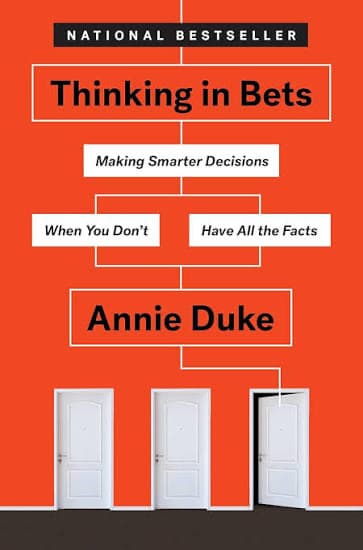
Thinking in Bets: Making Smarter Decisions When You Don't Have All the Facts.
Underpins · Separating decision quality from outcome
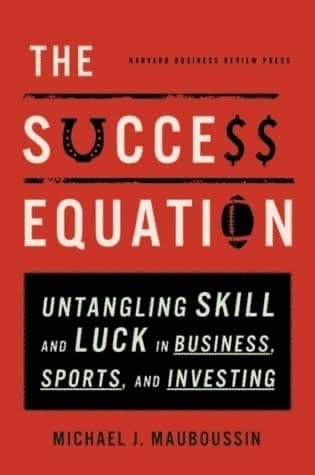
The Success Equation: Untangling Skill and Luck in Business, Sports, and Investing.
Underpins · The process-versus-outcome vocabulary
Trading is hazardous to your wealth. The Journal of Finance 55(2):773–806.
Underpins · Overconfidence & the cost of overtrading
The roster is illustrative, not exhaustive, and citation is not endorsement. Where the evidence is contested or thin, we say so and build to the edge of what the research supports — no further.
Involvement scales to your time. Any one of these is a complete contribution; none assumes the others.
Anchor a course or module on decision quality and judgment under uncertainty.
Hold a named Academic Advisory Board seat overseeing the assessment standard.
Periodic sessions with operators working through the material, at a cadence you set.
Contributions are recognized and compensated; specific terms are set individually and privately, and structured to preserve the independence described above.
No application to rush — a request to open a conversation about where your work might sit, on your terms and at your pace.
Begin a conversation