

Tom Gibbs
Instructor
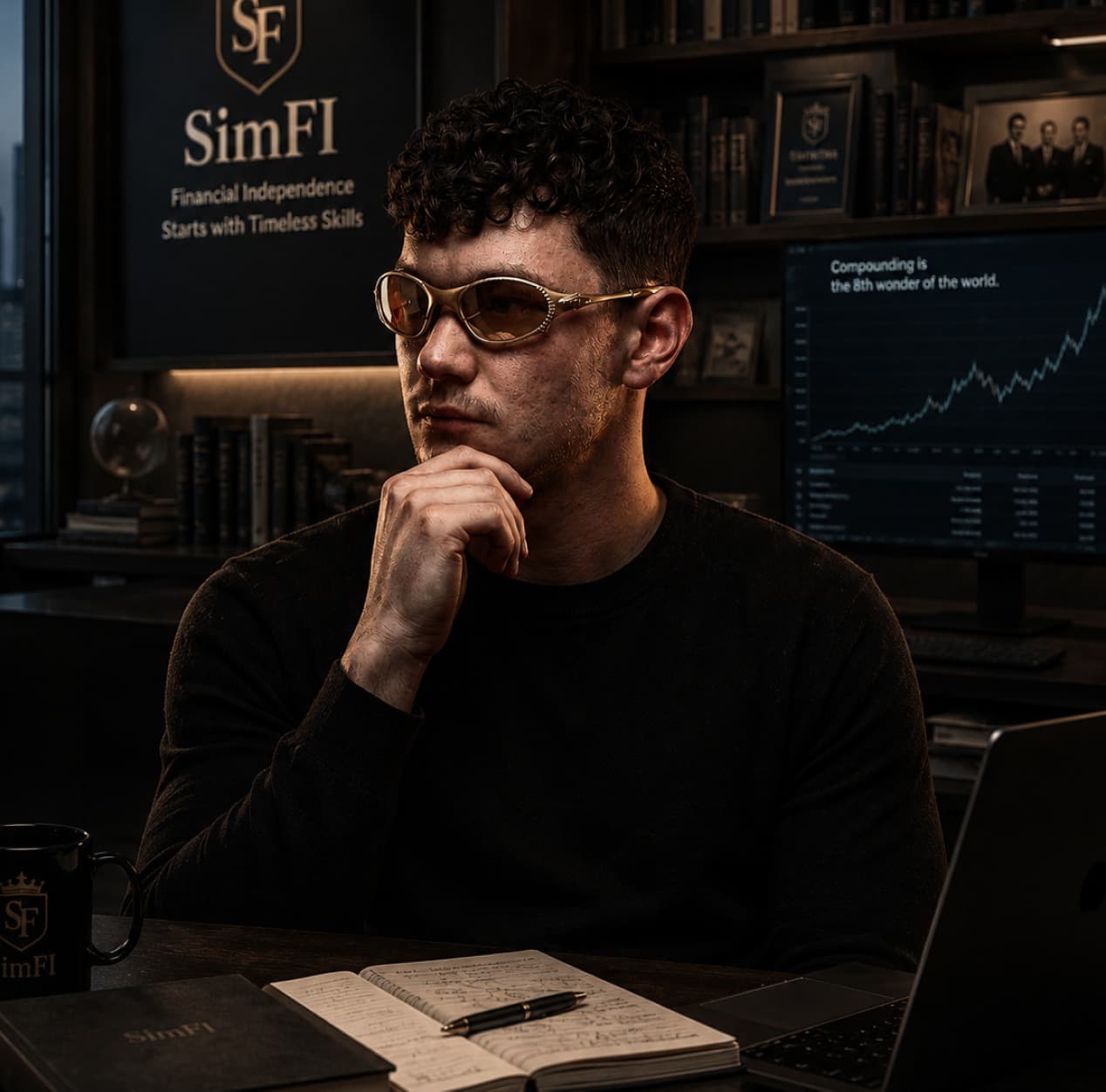
Tom Gibbs is an instructor at SimFi University and a practitioner in the foreign exchange market. His teaching centers on how a trader builds, tests and refines a strategy that fits their own life and temperament. It also covers the habits that support consistent decisions over time.
Role at SimFi
Like each SimFi instructor, he contributes to the University's curriculum from the standpoint of active practice. His part is to show how its concepts hold up in real trading conditions. He draws on what changed his own approach, the mistakes he sees learners make, and the routines he keeps.
Practice background
He trades the foreign exchange market on higher timeframes as an independent practitioner. His practice includes trading within a simulation and assessment environment.
What he teaches
A strategy, in his view, has to fit the person using it. Many learners adopt whatever strategy a course supplies without asking whether it suits their schedule or temperament, so he asks them to start from their own circumstances.
Backtesting, which means testing a strategy against historical market data, is the basis for confidence. It reveals the strategy's historical drawdown, the largest fall from a peak before recovery. That tells a learner whether the strategy fits the risk rules of the program they trade in, and it gives them a way to measure whether a change is an improvement.
His instruction covers:
- choosing and testing a strategy suited to the learner's available time and temperament
- understanding a strategy's historical drawdown and its fit with program risk rules
- taking fewer, more selective trades and planning exits in advance
- building a macro thesis, a view of economic and geopolitical conditions used alongside technical analysis of price charts
- keeping a trading journal and using it to identify emotional triggers
- attending to sleep, health, stress and the psychological demands a strategy places on the trader
He presents trading skill as something built gradually, through sustained practice and personal change, rather than a route to quick results.
His own routine reflects these priorities:
- Daily: he follows economic and geopolitical news, reviews charts, and practices stress management, exercise and visualization of difficult sessions.
- Weekly or monthly: he backtests and refines his strategy.
- Throughout: he keeps a trading journal and continues his own study.
How he came to it
His path into trading began outside the financial industry. After an introductory course, he learned largely through independent study, and his early period included losses and unsuccessful assessments.
Several changes followed:
- He kept employment outside trading while he developed his skills, which removed the pressure for each trade to cover living costs.
- He reduced the number of markets he followed and the number of trades he took.
- He planned his exits explicitly and adapted his approach to program drawdown rules.
- He added a macro thesis to his technical analysis.
His trading journal showed recurring emotional responses, including trading to recover losses. He concluded that his temperament needed as much attention as his strategy. He then moved to higher timeframes, which suited a more methodical approach.
Trader Score
The Trader Score is an independent measure of trading behavior across six families. It does not measure profit. The activity it reflects takes place on simulated capital.
- Risk integrity
- Execution quality
- Behavioral stability
- Consistency and durability
- Adaptation to context
- Education completion
Institutions and organizations are named on this page to identify the instructor's professional history. Their mention does not imply endorsement of SimFi University by those institutions, nor any accreditation of SimFi University. This page describes professional experience. It does not report trading results, and the Trader Score shown measures behavior, not profit.